

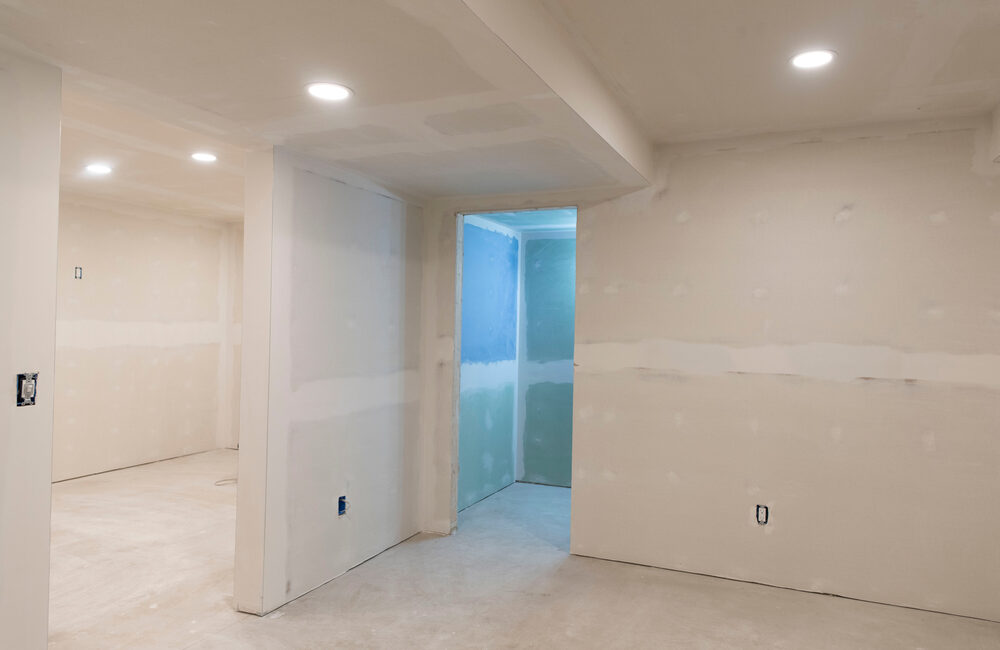
Remodeling a narrow basement presents a distinct set of challenges that differ significantly from standard renovation projects. Most homeowners view these long, corridor-style spaces as unusable for anything other than storage or a laundry area. However, with the right approach and professional guidance, you can transform this area into a highly functional, beautiful extension of your living space.
At Avantgarde Home Improvements, we believe the secret to a successful basement remodel near Philadelphia lies in working with the natural flow of the room rather than fighting against it. This guide examines the structural and aesthetic decisions required to maximize every square inch of a linear basement.
Assessing Your Structural Limitations
Before you purchase a single stud or gallon of paint, you must evaluate the existing conditions of your basement. Narrow basements often suffer from limited light and lower ceilings compared to the rest of the house. You need to measure the floor-to-ceiling height in several spots, as concrete floors often slope toward a floor drain.
Moisture control is the single most critical factor in any basement project. Narrow spaces trap humidity more easily than open plans, which can lead to mold growth behind your new walls. You should tape a piece of plastic sheeting to the concrete wall for 48 hours to test for moisture. If condensation forms underneath the plastic, water is seeping through the foundation; if it forms on top, you have high humidity.
Check the location of mechanical systems like your furnace, water heater, and support columns. In a thin room, you cannot simply build a wall around these items without sacrificing precious width. You might need to hire a specialist to relocate pipes or ducts into the joist bays to reclaim headroom. Avantgarde Home Improvements specializes in these types of complex structural reconfigurations, ensuring that your mechanical systems don’t dictate your design.
Strategic Layout and Zoning
The biggest mistake homeowners make in narrow basements is trying to create separate rooms with physical walls. Building a partition wall instantly chops the space into small, claustrophobic boxes that feel unlivable. A better approach involves “zoning,” where you use furniture arrangements, area rugs, or lighting changes to define different functions within the long layout.
The Power of the Side Path
Place your main traffic path along one side of the room rather than down the center. A center walkway splits the room into two uselessly thin strips, whereas a side path leaves a larger block of space for furniture. For example, if your room is 12 feet wide, a 3-foot walkway on the left leaves you with a usable 9-foot wide living area—perfect for a sofa and media console.
Utilizing Natural Light
Consider the placement of windows when deciding where to put your primary activity zones. If you are creating a home office, place the desk near the window to benefit from natural light. Darker sections of the corridor are better suited for TV areas or media rooms where light control is actually an advantage.
Step-by-Step Renovation Process
Executing a remodel in a tight space requires careful sequencing to avoid “painting yourself into a corner.” Avantgarde Home Improvements follows a rigorous order of operations to ensure the longevity of the build.
1. Seal and Waterproof the Foundation
Apply a masonry waterproofer to bare concrete walls and repair any cracks with hydraulic cement. This creates the primary barrier against outside moisture. If your basement has a history of flooding, installing a sump pump now is non-negotiable.
2. Frame Walls with a Slim Profile
Use rigid foam insulation boards against the concrete followed by $2 \times 4$ framing. To conserve floor width, keep the framing as close to the foam as possible.
3. Install Electrical and Lighting
Run wiring for outlets and overhead lights. Prioritize recessed lighting to maintain ceiling height and avoid visual clutter. This is also the time to run your HDMI or ethernet cables behind the walls to keep the narrow space wire-free.
4. Hang Drywall and Paint
Install moisture-resistant drywall (often “purple board”). To make the room feel expansive, paint the walls and ceiling a light, consistent color to blur the boundaries of the room.
5. Lay the Flooring
Install waterproof flooring such as Luxury Vinyl Plank (LVP). A crucial trick used by the pros at Avantgarde Home Improvements is to run the planks perpendicular to the long walls to visually “push” the walls apart and make the room feel wider.
Lighting Techniques to Expand Space
Lighting plays a psychological role in how large a room feels. In a narrow basement, shadows in the corners create a “tunnel effect.” You need to “wash” the walls with light to push them visually outward.
- Recessed Lighting: Position lights closer to the side walls rather than in a single row down the center. This illuminates vertical surfaces, tricking the eye into perceiving the room as wider.
- Layered Lighting: Supplement overhead lights with wall sconces or LED strips tucked behind shelving. These fixtures add depth without taking up floor space.
- Reflective Surfaces: Use satin or eggshell finishes on walls to gently bounce light without the harsh glare of high-gloss paint.
Smart Storage: Built-ins Over Bulk
Clutter will destroy the functionality of a narrow room faster than anything else. Standard bookcases and cabinets stick out too far, eating up valuable floor area. You should look for shallow storage options or build them directly into the walls.
Recessed shelving utilizes the space between wall studs. By cutting into the drywall and framing a box between the $2 \times 4$ studs, you gain nearly four inches of depth without encroaching on the room. This is perfect for storing books, media collections, or decorative items.
If you have a staircase leading down to the basement, the area underneath is “dead space” waiting to be used. Avantgarde Home Improvements can design custom pull-out drawers or a built-in desk to fit perfectly in this triangular niche, keeping the main thoroughfare clear.
Choosing the Right Materials
The materials you select must handle the basement environment while contributing to the visual expansion of the room.
- Flooring: Luxury Vinyl Plank (LVP) is the industry standard. It is 100% waterproof and very thin. A thin floor covering is crucial when you are fighting for every inch of ceiling height.
- Furniture: Choose furniture with exposed legs rather than solid bases. Being able to see the floor continue underneath a sofa or cabinet makes the room feel wider and less crowded.
- Colors: Stick to a monochromatic palette. Using different colors for the trim, walls, and ceiling breaks the room into smaller segments. Using a single shade like a soft “greige” allows the eye to travel uninterrupted, creating the illusion of a larger space.
Managing Acoustics in a Linear Room
Narrow rooms with hard surfaces often create an echo chamber effect. Sound bounces rapidly between parallel walls, making it difficult to enjoy a movie or have a clear conversation.
Area rugs are essential if you install hard flooring. They anchor your furniture zones and dampen foot traffic noise. Avantgarde Home Improvements often recommends acoustic wall panels for home theaters; modern versions look like art canvases rather than industrial foam, blending style with function.
Conclusion: Small Space, Big Potential
Transforming a narrow basement requires a shift in perspective. You must stop seeing the limitations of the width in your basement remodel near Bucks County and start seeing the potential of the length. By prioritizing moisture control, smart lighting, and strategic zoning, you can create a space that feels comfortable and intentional.
Every inch counts in a linear layout. From recessed shelving to slim-profile furniture, your choices should maximize open floor space. With the professional touch of Avantgarde Home Improvements, your narrow basement will go from a cramped corridor to the most popular room in your home.
